
Meta Ads generates latent demand for dental clinics. Which treatments work, how to segment within health restrictions, what creatives convert and how much to
A patient searching for "dental implants Manchester" on Google has already decided they need a dentist. A patient who sees your ad on Instagram while scrolling has decided nothing yet. That difference completely changes how Meta Ads campaigns (the advertising platform that manages ads across Facebook, Instagram, Messenger and the Meta audience network) are designed, measured and optimised for dental clinics. Google Ads captures active demand. Meta Ads generates latent demand: it shows your clinic to people who fit your ideal patient profile but who are not searching for a dentist at that moment. That does not make it less effective. It means it works on a different logic, requires different creatives and needs a more structured follow-up process to turn those enquiries into first appointments. In this guide you will find which treatments work on Meta, how to segment audiences while respecting the platform's health restrictions, which creatives convert, how much to invest and how to integrate Meta Ads with your patient acquisition strategy.
Why does Meta Ads work differently to Google Ads for dental clinics?
The fundamental difference is patient intent. On Google Ads, the patient has a conscious need and is actively searching for it. On Meta Ads, the patient may have that need without knowing it (their smile bothers them but they have never searched for veneers) or may be at a very early stage of consideration.
This has three direct implications for your clinic:
The CPL (cost per qualified enquiry) cannot be compared directly with Google. A Meta Ads enquiry at £25 is not worth the same as a Google Ads enquiry at £50, because the Google one is already actively searching and has a higher conversion rate to first appointment. Comparing CPL across platforms without accounting for enquiry quality leads to the wrong budget decisions.
The treatments that perform best are different. On Google Ads, implants and emergencies convert very well because they respond to an immediate need. On Meta Ads, cosmetic and smile-improvement treatments perform better because they create desire: the patient sees a visual result and thinks "I want that".
The conversion process needs more steps. A Google Ads patient might call the same day. A Meta Ads patient needs more touchpoints before deciding: they might fill in a form today, need a WhatsApp follow-up the next day and book the appointment three days later. Without a fast follow-up protocol from reception, Meta enquiries go cold far quicker than Google ones.
Which treatments work (and which don't) on Meta Ads
Not every treatment a dental clinic offers produces good results on Meta Ads. The general rule: treatments sold by desire perform better than those sold by necessity.
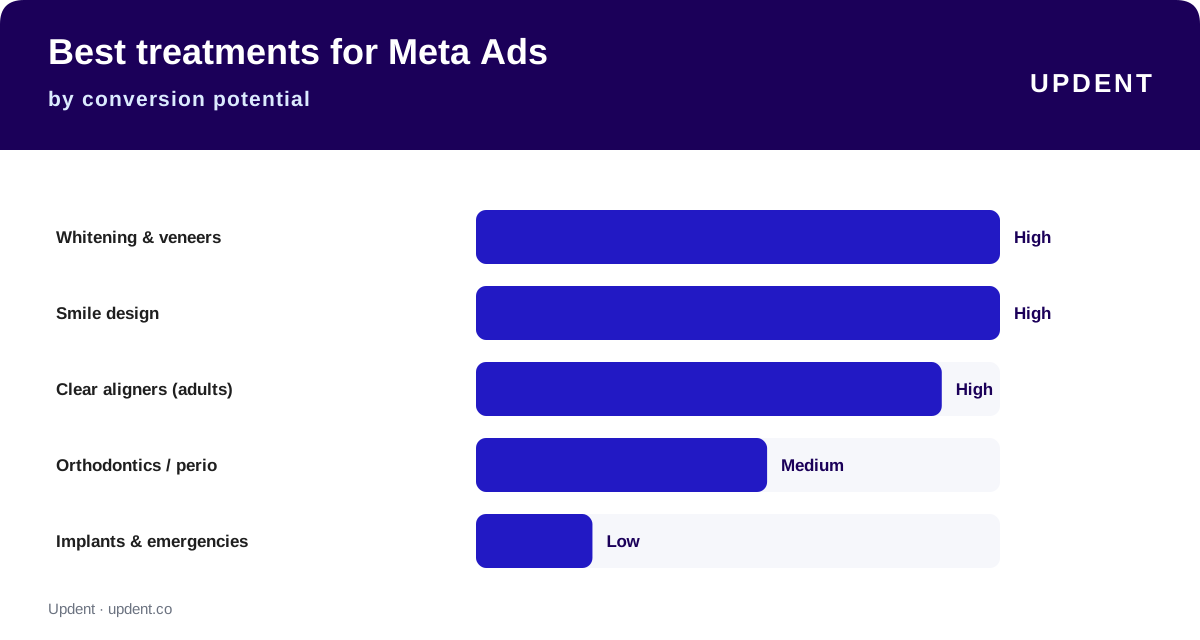
High effectiveness on Meta: Teeth whitening, veneers and smile design (the patient sees the visual result and wants the same). Clear aligners for adults (a combination of aesthetics and function, broad audience). Cosmetic dentistry in general. These treatments lend themselves to visual creatives with transformations that grab attention during the scroll.
Medium effectiveness: Fixed-brace orthodontics (works if the creative is well aimed at teenagers and parents). Periodontics (if framed as "gum health" with an educational angle). Check-ups and hygiene appointments as an entry point to bigger treatments.
Low effectiveness on Meta: Dental implants (a medical need, the patient prefers to search actively on Google). Emergencies (nobody searches for an emergency dentist while scrolling Instagram). Root canals and invasive treatments (too complex for a visual ad).
This does not mean you cannot advertise implants on Meta. But if your budget is limited, concentrate Meta Ads on cosmetics and orthodontics, and leave implants and emergencies for Google Ads.
The Meta health restrictions you must know before creating an ad
Meta has strict policies on health advertising. Breaking them can result in your ad being rejected, your account being restricted or, in repeat cases, your advertising account being disabled entirely.
The four restrictions that directly affect dental clinics:
Restriction 1: You cannot target by health conditions. Meta does not allow you to build audiences based on specific dental problems. You cannot target ads at "people with cavities" or "people who need implants". The alternative: segment by demographics (age, location, socioeconomic level), interests (health, wellbeing, aesthetics, fashion) and lookalike audiences based on your current patients.
Restriction 2: Be careful with before-and-after images. Meta reviews clinical images. Open-mouth photos with instruments can be rejected. The key: use before/after shots focused on the full smile (not clinical close-ups) and neutral language like "treatment result" instead of "perfect teeth" or "ideal smile".
Restriction 3: You cannot make unverifiable medical claims. "We eliminate gum disease forever" gets rejected. "Gum-health treatment with personalised follow-up" gets approved. Avoid superlatives and guaranteed-result promises. This also keeps you on the right side of the Advertising Standards Authority (ASA) and General Dental Council (GDC) rules on healthcare advertising.
Restriction 4: Limits on health remarketing. Meta restricts the use of health-page visit data to build retargeting audiences (ads shown to people who have already visited your website). This affects the creation of custom audiences based on visits to specific treatment pages.
If you need to recover a disabled advertising account, Meta's appeal process can take between 5 and 30 days. It is better to prevent the problem by respecting the policies from the start.
How to structure Meta Ads campaigns for your dental clinic
The ideal structure in 2026 separates acquisition and remarketing into different campaigns.
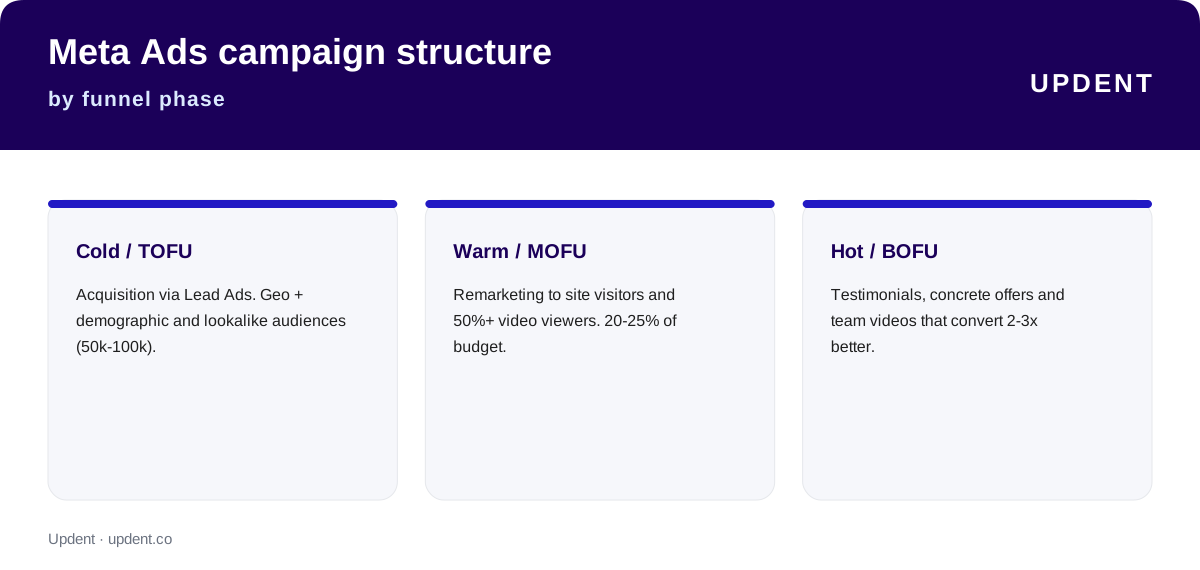
Campaign 1: Acquisition (cold traffic)
Objective: Lead generation (Lead Ads with Meta's instant form or conversions on your website).
Audiences:
Geographic + demographic audience: a 10-20 km radius around your clinic, age 25-65 depending on the treatment, interests in health, wellbeing, aesthetics and personal care. Ideal size: 50,000-100,000 people.
Lookalike audience: upload your list of current patients (emails or phone numbers) to Meta and the platform finds people with similar characteristics in your area. It is the best-performing audience in dental because it is based on the real profile of people who have already chosen you.
Creatives: a 15-30 second video as the main format (see next section). One ad set with 3-4 creative variations so the algorithm can find the one that works best.
Campaign 2: Remarketing (warm traffic)
Objective: Convert people who have already interacted with your clinic but did not call.
Audiences: people who visited your website in the last 30-90 days, people who watched more than 50% of one of your videos, people who engaged with your Instagram or Facebook profile.
Creatives: patient testimonials (with consent), concrete offers ("free first consultation including assessment"), team videos to build trust.
Remarketing budget: 20-25% of your total Meta Ads budget. These enquiries convert 2-3 times better than cold traffic because they already know you.
Creatives that convert in dental: what works in 2026
The format that performs best on Meta Ads for dental is short video: between 15 and 30 seconds. It beats static images on engagement rate and on cost per enquiry.
The four types of video that work best:
Visual transformation. Before and after of a smile (respecting Meta's restrictions: focus on the full smile, not clinical close-ups). Works especially well for whitening, veneers and orthodontics.
The dentist explains. A video of the lead dentist explaining a treatment in 20 seconds, straight to camera, no jargon. It humanises the clinic and builds trust. The ideal format for Instagram Reels and Stories.
Patient testimonial. A real patient (with signed consent) telling their story in 20-30 seconds. More credible than any ad copy.
Clinic tour. A short video showing the premises, the technology and the team. It reduces anxiety for the patient who does not yet know the clinic.
Refresh your creatives every 4-6 weeks. When an audience sees the same ad too many times, performance drops (this is called creative fatigue). Always keep 3-4 variations running and replace the ones that perform worst.
As for the copy (the ad text): open with a question that identifies the ideal patient ("Have you been thinking about improving your smile?"), address the main objection (price, pain, time) and close with a concrete call to action ("Send a message for your free consultation"). Social media for dental clinics follows these same content principles.
Budget: how much to invest and what to expect
The Meta Ads budget for a dental clinic depends on the objective and the stage you are at.
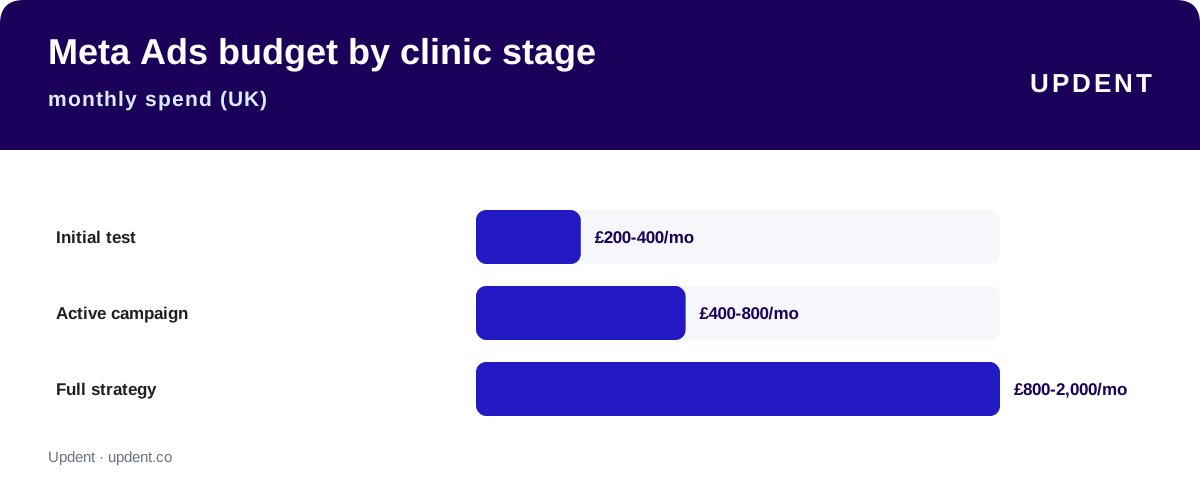
| Stage | Monthly spend | Estimated enquiries | What it's for |
|---|---|---|---|
| Initial test (first month) | £200 to £400 | 5 to 15 | Validate audiences and creatives |
| Active campaign | £400 to £800 | 15 to 40 | Regular patient acquisition |
| Full strategy (acquisition + remarketing) | £800 to £2,000 | 40 to 100 | Scale with continuous optimisation |
The CPL on Meta Ads for dental in the UK moves between £15 and £60 depending on the treatment, the city and the quality of the creatives. Whitening and cosmetics tend to sit at the lower end (£15-£30). Orthodontics in the middle (£25-£50). Implants at the higher end (£40-£60+).
But remember: the CPL is not the real patient acquisition cost (what it costs you to get a patient sitting in the chair). To work that out you need to know how many of those enquiries turn into a first appointment. If you generate 30 enquiries at £25 each (£750) and 8 attend the first appointment, your real acquisition cost is £94 per patient. If only 3 turn up, it rises to £250.
The difference comes down to the speed and quality of the follow-up your reception does.
How to integrate Meta Ads with the rest of your strategy
Meta Ads does not work in isolation. It is a demand-generation layer that integrates with the rest of your channels.
The usual journey of a patient acquired through Meta Ads:
They see your ad on Instagram → fill in the form or send a message → your reception makes contact within the first 2 hours (critical: if you take more than 24 hours, the conversion rate drops below 10%) → book the first appointment → the patient searches your name on Google before coming in (your online reputation needs to be in order) → arrives at the clinic.
This journey reveals something important: Meta Ads generates the enquiry, but conversion depends on internal follow-up (reception, WhatsApp, re-contact) and your online reputation. A brilliant Meta campaign with a reception that takes 3 days to reply generates frustration, not patients.
Integration with Google Ads for dentists creates a multiplier effect: Meta builds visibility and familiarity with your brand, and when that patient finally searches on Google (because they have a real problem or remember your ad), your clinic also appears in the search results. Patients who have seen your brand on social media before searching for you on Google have a click-through rate 20-30% higher.
To understand how all these channels fit within a structured dental marketing plan, the key is to measure each channel by its contribution to first appointments, not by intermediate metrics like reach or clicks.
Conclusion: Meta Ads generates patients if you have the process to convert them
Meta Ads is the most effective demand-generation channel for cosmetic treatments and orthodontics in dental clinics. But it only works if you have two things: creatives that grab attention and a follow-up process that turns enquiries into first appointments in under 48 hours.
If you want to find out whether Meta Ads fits your clinic's strategy and what budget to start with, request your free audit. In 30 minutes we analyse your situation and recommend the channels that make the most sense for your goals. No obligation.
Frequently Asked Questions
The minimum budget to test Meta Ads (Facebook and Instagram) for a dental clinic is £200 to £400 a month. For an active campaign that generates enquiries regularly, the usual range is £400 to £800 a month. The cost per qualified enquiry in the UK moves between £15 and £60 depending on the treatment and the city.

José Ramón Díaz
+10 años de experiencia en Marketing y Startups especializado en el sector Salud y Dental. Ex-DR SMILE e Impress.
Want us to implement
this in your practice?
Book your free audit and we'll show you exactly how to grow.
Talk to a Strategist
