
How to build Google Ads campaigns that bring real new patients to your dental practice: structure, keywords, budgets by treatment, metrics and the costliest
When a patient searches "dental implants London" at eleven o'clock at night from the sofa, you have exactly 3 seconds to show up. If your practice isn't in those first Google results, another practice wins that first visit. Google Ads is the only dental marketing channel that captures active demand: people searching for a dentist or a specific treatment at that very moment. Unlike social media, where you generate interest in people who aren't searching, on Google Ads you respond to a need that already exists. That makes the conversion rate (the percentage of people who click and end up getting in touch) between 5 and 10 times higher than any social media campaign. But badly set up, Google Ads can burn hundreds of pounds a month on clicks from people looking for dental jobs, dentistry courses or treatment in another country. This guide covers everything you need to build campaigns that generate real first visits: structure, keywords, budgets by treatment, metrics and the mistakes that cost the most money.
Why does Google Ads work especially well for dental practices?
Google Ads works for dental better than for most sectors for one simple economic reason: the value of each new patient is high. An implant treatment generates between £1,500 and £3,000 in revenue. A full course of orthodontics, between £2,000 and £5,000. Even a first hygiene visit can turn into a treatment plan worth several thousand pounds if the patient has accumulated needs.
With a CPC (cost per click, what you pay each time someone clicks your ad) of between £3 and £15 in the UK depending on the keyword and the city, and a conversion rate of 8-20%, the cost per qualified enquiry sits between £25 and £120. If out of every 10 enquiries 4 reach a first visit and 2 accept treatment, the ROI (return on investment) is positive from the first month.
The difference with other channels is intent. The patient who types "emergency dentist Manchester" isn't browsing: they need a dentist today. The one who types "how much do implants cost in Birmingham" is comparing options and will call 2-3 practices. Capturing that intent at the precise moment is what makes Google Ads the fastest acquisition channel in dental.
Types of Google Ads campaign for dental practices
Search campaigns
This is the main format for dental. Your ads appear in Google's results when someone searches a keyword related to your treatment and your city. They're the ads with the highest purchase intent because they respond to an active search.
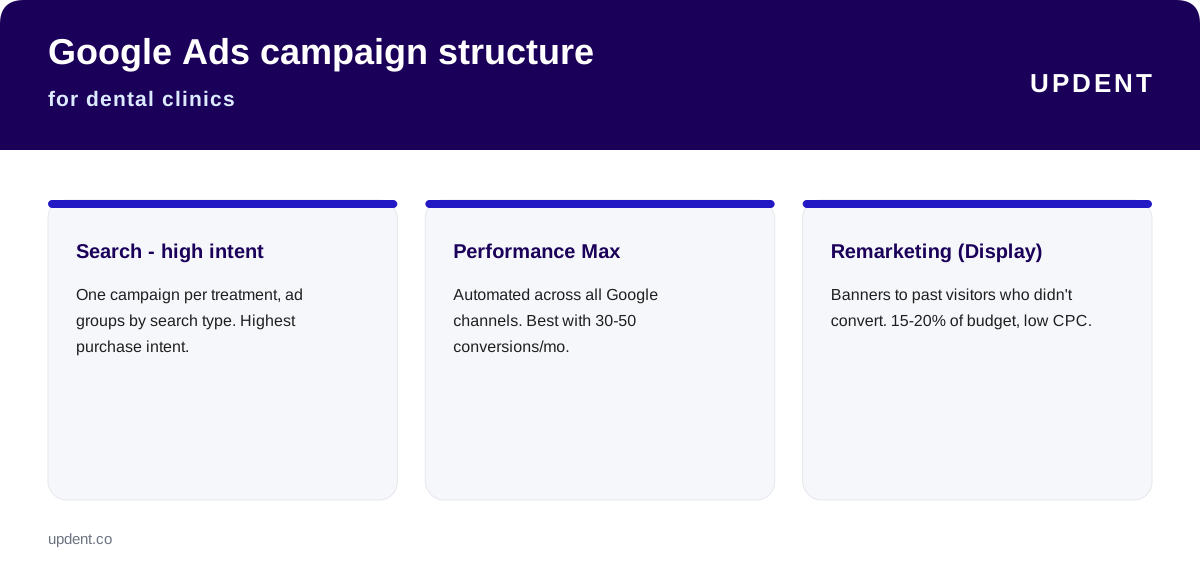
The key is structure. One campaign per treatment, not one campaign with everything mixed together. Each campaign has ad groups segmented by type of search.
Example structure for a practice in London:
Campaign: Dental Implants, London Group 1: Generic searches ("dental implants london", "implant clinic london") Group 2: Price searches ("dental implant cost london", "how much is a dental implant london") Group 3: Urgent searches ("lost a tooth solution", "urgent dental implant")
Campaign: Orthodontics, London Group 1: General orthodontics ("orthodontist london", "adult orthodontics london") Group 2: Invisalign ("invisalign london", "invisible braces london price") Group 3: Braces ("adult braces london", "braces cost london")
Each group has specific ads that talk exactly about what the patient is searching for. If someone searches prices, your ad mentions prices. If they search emergencies, your ad talks about immediate availability.
Performance Max (PMax)
Performance Max is the most automated Google Ads format. It distributes your ads across all of Google's channels (Search, Display, YouTube, Maps, Gmail) and the algorithm decides where and when to show them.
It works well for practices that already have a volume of 30-50 monthly conversions, because the algorithm needs data to optimise. For new practices or those with low budgets (under £600/month), manual search campaigns give more control and better results at the start.
Remarketing (Display)
Remarketing shows banner ads to people who already visited your website but didn't call or fill in the form. Dental patients visit between 3 and 5 websites before deciding. Remarketing keeps you present during that decision process.
Recommended budget: 15-20% of the total Ads budget. The CPC on remarketing is much lower (£0.50-£2) and the audience already knows you, so the conversion rate is high.
Keywords for dentists: which to use and which to block
Keyword selection determines whether your budget is invested in potential patients or in irrelevant clicks. In dental, the difference between good and bad keyword selection can be £50 per enquiry.
High-intent keywords (the ones that convert)
Implants: dental implants [city], implant clinic [city], dental implant cost [city], dental implant [neighbourhood/area], same-day implants [city]
Orthodontics: adult orthodontics [city], invisalign [city], invisible braces price [city], orthodontist [city], adult braces [city]
Cosmetic dentistry: teeth whitening [city], dental veneers [city], smile makeover [city], cosmetic dentist [city]
Emergencies: emergency dentist [city], severe toothache [city], dentist open today [city], dental emergency [city]
General dentist: dentist [city], dentist [neighbourhood], dental practice [city], dentist near me
Always include the city or area. "Dental implants" without a location attracts informational searches from across the country. "Dental implants Birmingham" attracts potential patients in your area.
Negative keywords (essential)
Negative keywords tell Google when NOT to show your ad. Without them, your budget is wasted on clicks from people who won't become patients.
Training and jobs: course, courses, masters, degree, university, study, job, vacancy, salary, how much does a dentist earn
Dental tourism (if you don't offer it): turkey, hungary, croatia, albania, mexico, poland, dental abroad
Informational, no intent: what is, wikipedia, history, origin, types of (when clearly educational)
NHS and free: free dentist, NHS dentist, nhs dental, free dental treatment
Review the search terms report every week during the first month, and every two weeks after that. Every irrelevant search that triggered your ad is wasted money that you fix by adding that keyword as a negative.
How to write ads that generate patient clicks
A Google search ad has three elements: headlines (up to 15, Google selects combinations), descriptions (up to 4) and assets (free extensions that expand the ad).
Headlines that work in dental
Include: main keyword, practice name, city, concrete differentiator.
Examples: "Dental Implants London", "Free First Visit", "500+ Implants Placed", "No-Obligation Quote", "[Name] Practice, 15 Years' Experience".
Descriptions that convert
Structure: concrete benefit + objection removal + call to action.
Example: "Implants with a 10-year guarantee. Process in 2-3 visits with sedation available. Request your free quote."
Another: "Invisible braces from £89/month. Free first consultation with 3D scan included. Call now or book online."
Assets (extensions): free and essential
Assets are ad extensions that Google shows when there's space. They're free and increase CTR (the percentage of people who click out of those who see the ad) by between 10% and 25%. Not having them set up is money left on the table.
Sitelinks: direct links to treatment pages ("Implants", "Orthodontics", "First Visit", "Reviews"). Call extension: shows your phone number directly in the ad. On mobile, the patient calls with one tap. Location extension: connected to your Google Business Profile, shows the address and the link to Maps. Price extension: shows price ranges by treatment. Filters out clicks from people outside your range.
Budget and metrics: how much to invest and what to measure
The minimum budget on Google Ads depends on the treatment, the city and the competition. These are indicative ranges for mid-sized UK cities:
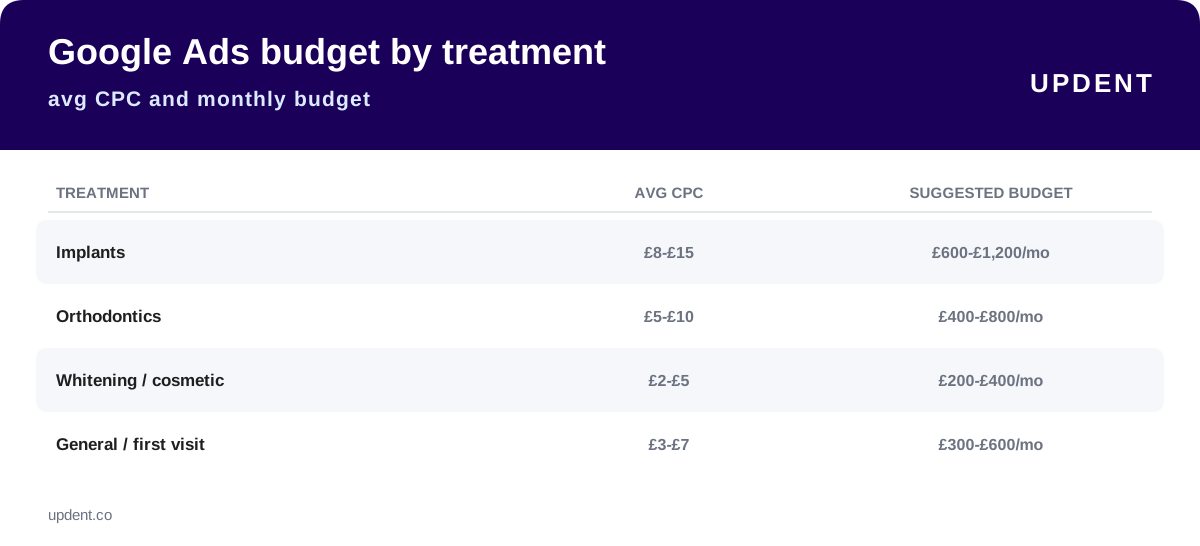
| Treatment | Monthly budget | Average CPC | Estimated clicks | Expected enquiries |
|---|---|---|---|---|
| Implants | £600 to £1,200 | £8 to £15 | 60 to 150 | 6 to 18 |
| Orthodontics | £400 to £800 | £5 to £10 | 80 to 160 | 8 to 20 |
| Whitening / cosmetic | £200 to £400 | £2 to £5 | 80 to 200 | 10 to 30 |
| General dentist / first visit | £300 to £600 | £3 to £7 | 85 to 200 | 12 to 25 |
In London the CPCs are 30-50% higher. In smaller towns, 20-40% lower.
The metrics you should review every week
CTR (Click-Through Rate). The percentage of people who see your ad and click. Above 5% is a good figure in dental. Below 3% indicates the ad isn't connecting with the search.
Conversion rate. The percentage of clicks that generate a contact action (call, form, WhatsApp). Usual range in dental: 8-20%. If it's below 8%, the problem is usually on the landing page, not the ad.
CPL (cost per qualified enquiry). Total spend divided by enquiries generated. Example: £800 spent, 12 enquiries = a CPL of £67. You compare this figure month to month to see whether the campaign is improving or getting worse.
Enquiry-to-first-visit conversion rate. Of the enquiries generated, how many reach the chair. This no longer depends on Google Ads: it depends on your front desk. If you generate 20 enquiries and only 4 turn up, the problem isn't the campaign. It's the internal conversion process.
Landing pages: where each click lands matters as much as the ad
Sending Google Ads clicks to your website's homepage is one of the costliest mistakes in dental. A homepage's conversion rate is between 3 and 5 times lower than that of a landing page specific to the treatment searched.
If someone searches "dental implants Manchester", they should land on a page that talks only about implants, with an indicative price, the technology you use, real photos of the team, reviews from implant patients and a form or call button visible without scrolling.
Your dental website should have a landing page for each main treatment. If you don't have them, create them before launching campaigns. Every pound you invest in a click that lands on a generic page is a pound with less chance of turning into a patient.
The 6 Google Ads mistakes that cost the most money in dental
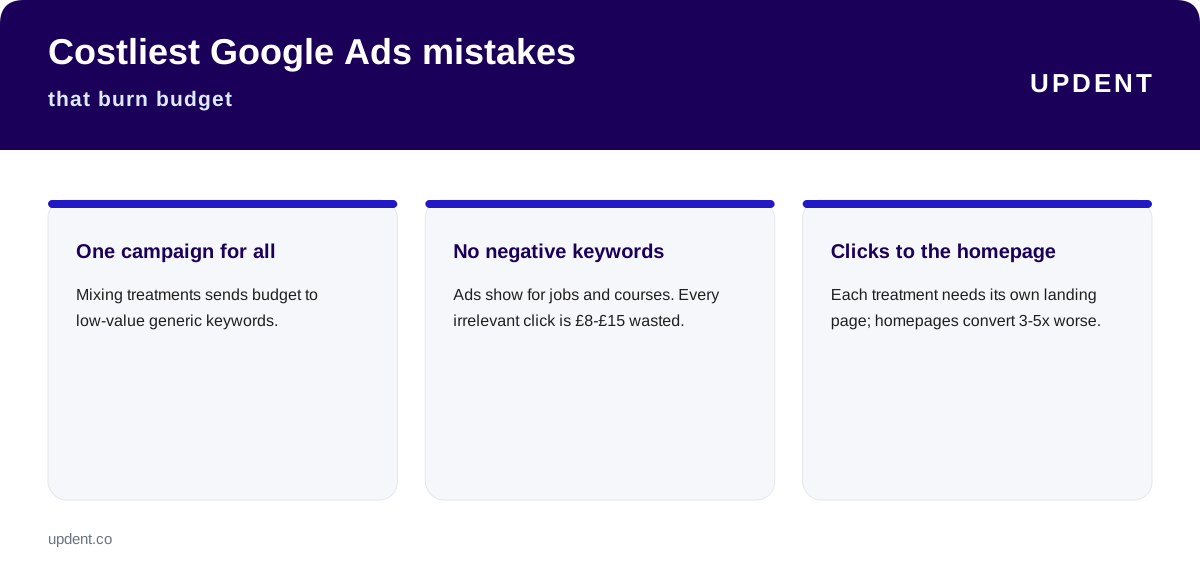
Mistake 1: One single campaign for all treatments. Mixing implants, orthodontics and whitening in one campaign means the budget is distributed uncontrollably. Google prioritises the keywords with the most volume, not the ones that generate the most value for your practice. Result: most of the budget goes to low-value generic keywords.
Mistake 2: Not using negative keywords. In 2026 Google's broad match types are increasingly aggressive. Without negative keywords, your implant ad shows up when someone searches "implantologist job" or "implantology courses". Every irrelevant click is £8-£15 wasted.
Mistake 3: Sending every click to the homepage. We've said it already, but it bears repeating because it's the most common mistake. Each treatment needs its own specific landing page.
Mistake 4: Not having conversion tracking set up. If you don't know which ads generate calls and which generate clicks that don't convert, you're optimising blind. Conversion tracking (calls, forms, WhatsApp) is the first thing to set up, before spending a single pound.
Mistake 5: Pausing campaigns when the diary is full. The Google Ads algorithm learns from data. Every time you pause and restart, it loses that learning. If the diary is full, cut the budget to 50% instead of pausing. That way you keep the flow of data and can scale back up quickly when there are gaps.
Mistake 6: Ignoring what happens after the click. Google Ads can generate 30 enquiries a month for your practice. If your front desk doesn't answer calls within the first 30 seconds, if no one follows up on forms that arrive at the weekend, if there's no re-contact protocol for pending quotes, those 30 enquiries turn into 5 first visits instead of 15. The costliest problem with Google Ads isn't in Google: it's in what happens afterwards.
These dental marketing mistakes are the most frequent and the most costly because they go unnoticed for months.
Google Ads and SEO: complementary, not mutually exclusive
Google Ads generates patients from the first week. SEO for dental practices takes between 3 and 6 months to take hold but generates the lowest CPL in the long term (£5-£25 versus £25-£120 for Ads).
The most profitable strategy combines both. Google Ads covers immediate acquisition while SEO grows. As organic ranking consolidates, you gradually reduce your dependence on Ads for the keywords where you already rank organically, and redirect that budget to new treatments or geographic areas.
This approach is part of a complete patient acquisition system, where each channel has a function and is measured by its contribution in real first visits, not in clicks or impressions.
If you also want to work on demand generation for cosmetic treatments or invisible orthodontics, our guide to Facebook Ads for dental practices explains how to structure social media campaigns that complement your Google Ads investment.
Conclusion: Google Ads is a tap of patients, but it needs a plumber
Google Ads is the fastest acquisition channel in dental. But it's a tap: when you stop paying, the flow stops. And if the tap is badly installed (no negative keywords, no landing pages, no conversion tracking), the water is lost before it reaches the chair.
If you already have active campaigns and don't know whether they're set up properly, or if you're considering getting started, request a free audit of your Google Ads account. In 30 minutes we review your structure, your keywords and your metrics, and tell you exactly what to adjust so that every pound invested generates more first visits. No obligation. Request your free audit.
Frequently Asked Questions
The cost per click on Google Ads for dental in the UK varies between £3 and £15 depending on the treatment and the city. The recommended monthly budget for a practice that wants to attract patients for a specific treatment starts at £400-£600. To cover several treatments, the usual range is £1,000 to £2,500 a month. In London the costs are 30-50% higher than in mid-sized cities.

José Ramón Díaz
+10 años de experiencia en Marketing y Startups especializado en el sector Salud y Dental. Ex-DR SMILE e Impress.
Want us to implement
this in your practice?
Book your free audit and we'll show you exactly how to grow.
Talk to a Strategist
